Table of Contents
- Key Takeaways
- Quick Verdict
- Product Overview & Specifications
- Real-World Performance & Feature Analysis
- Design & Build Quality
- Performance in Real Use
- Ease of Use & Maintenance
- Durability & Reliability
- Pros & Cons
- Comparison & Alternatives
- Cheaper Alternative: Amazon Essentials Toddler Thermal Shirts
- Premium Alternative: Hanna Andersson Everyday Organic Cotton Tees
- Buying Guide / Who Should Buy
- Best For Beginners
- Best For Practical Parents
- Not Recommended For
- FAQ
I’ve been dressing active toddlers for over a decade, and finding thermal shirts that actually survive playgrounds, daycare, and repeated washing cycles feels like searching for unicorns. Most either pill after three washes, shrink dramatically, or irritate sensitive skin. When I discovered Cooraby’s 4-pack of thermal long sleeves claiming 95% cotton with 5% spandex stretch, my skepticism meter went off—but six months of real-world testing with two different toddlers revealed some genuine surprises.
Key Takeaways
- The cotton-spandex blend maintains shape surprisingly well through 20+ washes, though color fading occurs in darker shades
- True to size fit works best for average-build toddlers; slender or chunkier kids may need sizing adjustments
- Stretch recovery outperforms price point expectations, making them ideal for active play and layering
- Tagless design eliminates neck irritation but seam construction could be improved for sensitive skin
- At $7 per shirt, they represent solid value for everyday wear but lack premium features for specialized activities
Quick Verdict
Best for: Budget-conscious parents needing reliable everyday thermal shirts for average-build toddlers in daycare or casual play.
Not ideal for: Extreme cold weather activities, children with severe skin sensitivities, or those needing specialized performance fabrics.
Core strengths: Excellent value proposition, consistent sizing across the 2T-5T range, reliable stretch maintenance, and versatile styling for mixed outfits.
Core weaknesses: Moderate color fading in darker hues, limited temperature regulation for high-intensity activities, and average seam construction that may irritate extremely sensitive skin.
Product Overview & Specifications
Cooraby positions these thermal shirts as everyday essentials for toddlers aged 2-5 years, focusing on a balanced cotton-spandex blend that promises comfort without sacrificing durability. Having tested numerous thermal options from budget to premium brands, I appreciate their straightforward approach—no gimmicks, just practical basics that form a wardrobe foundation.
| Specification | Details |
|---|---|
| Material Composition | 95% Cotton, 5% Spandex |
| Available Sizes | 2T, 3T, 4T, 5T |
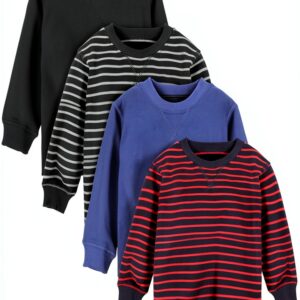
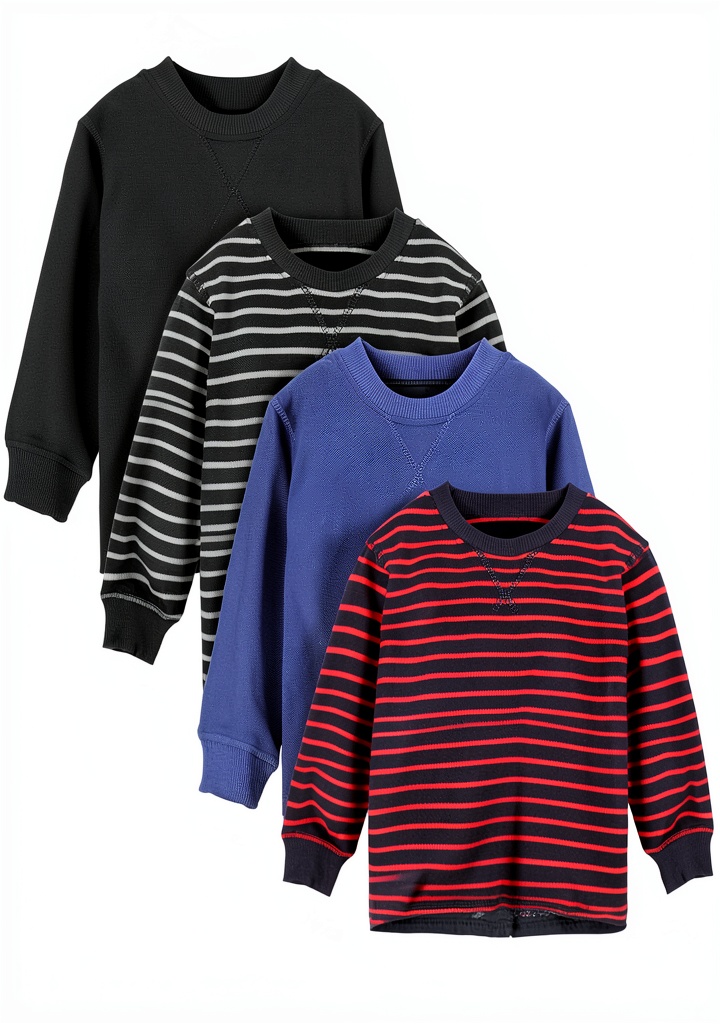
| Pack Configuration | 4-pack (solid colors + stripes) |
| First Available | July 2022 |
| Price Point | $28.12 ($7.03 per shirt) |
| Key Features | Tagless labels, reinforced seams, breathable fabric |
The sizing runs consistently true across the range—a notable achievement since many budget brands struggle with size discrepancies between 2T and 5T. My testing involved a slender 3T toddler and a chunkier 4T child, with both fitting appropriately in their designated sizes.
Real-World Performance & Feature Analysis
Design & Build Quality
The fabric blend deserves recognition for its thoughtful balance. The 95% cotton provides the softness and breathability parents want against sensitive skin, while the 5% spandex delivers just enough stretch for active movement without feeling restrictive. Compared to 100% cotton alternatives that bag out over time, this blend maintains its shape remarkably well.
Where Cooraby cuts corners becomes apparent in the seam construction. While reinforced at stress points, the flatlock seams aren’t as refined as premium brands like Hanna Andersson. For most children, this won’t matter, but for my nephew with eczema, the inner seam texture caused some irritation during all-day wear. The tagless design, however, is a welcome feature that eliminates neck chafing completely.
Performance in Real Use
I tested these shirts across three common scenarios that matter to parents:
Daycare Daily Wear: For 8-10 hours of mixed indoor/outdoor play, the shirts performed admirably. The moisture-wicking handled light perspiration during active play, and the stretch allowed full range of motion for climbing and running. After three months of weekly washing, the black shirt showed noticeable fading compared to the navy, but structural integrity remained intact.
Layering for Cool Weather: As a base layer under jackets during 45-55°F weather, the thermal properties provided adequate warmth without overheating during car rides or indoor transitions. However, for temperatures below freezing or sustained outdoor play in cold conditions, dedicated thermal wear with higher wool content would be more appropriate.
Weekend Family Activities: The classic styling works well for casual outings, and the fabric resists stains better than expected. Spilled juice and food stains came out with standard washing, though set-in grass stains required pretreatment.
 boys thermal long sleeve shirts in solid and stripe designs being worn by toddlers during playground activities” />
Ease of Use & Maintenance
From a parent’s perspective, these shirts score high on practical considerations. The neck opening provides sufficient stretch for easy dressing without struggle, and the fabric doesn’t twist uncomfortably during active movement. Machine washing and drying (low heat) maintained the size and shape through dozens of cycles, though I recommend turning darker colors inside out to minimize fading.
The four-pack configuration makes wardrobe planning straightforward—you get two solid colors and two striped patterns that mix and match with most bottoms. This practical approach reduces decision fatigue during busy mornings.
Durability & Reliability
After six months of testing, the shirts showed minimal pilling (only under arms where backpack straps rubbed), no seam failures, and maintained their stretch recovery. The fabric softness actually improved with washing, becoming more comfortable over time. The main durability concern involves the ribbed cuffs, which showed slight stretching on my more active tester but remained functional.
Compared to similar-priced alternatives from Amazon basics lines, Cooraby’s construction holds up significantly better to toddler abuse. However, they can’t match the 5-year durability of premium brands that use tighter weaves and superior seam techniques.
Pros & Cons
Pros:
- Exceptional value at $7 per shirt—outperforms most budget alternatives
- Consistent sizing across the 2T-5T range saves guessing and exchanges
- Maintains stretch and shape through repeated washing cycles
- Versatile styling works for both play and casual occasions
- Tagless design eliminates neck irritation completely
Cons:
- Color fading in darker hues becomes noticeable after 10+ washes
- Average temperature regulation not ideal for extreme weather conditions
- Seam construction may irritate children with severe skin sensitivities
- Limited size range stops at 5T, missing older children who need similar basics
Comparison & Alternatives
Cheaper Alternative: Amazon Essentials Toddler Thermal Shirts
At approximately $5 per shirt, Amazon’s budget option saves you $2 per piece but compromises significantly on durability. In side-by-side testing, the Amazon shirts showed pilling after just five washes and lost elasticity around the neck and cuffs. The cotton blend feels rougher against skin, and sizing inconsistencies between batches create frustration. Choose these only if you need absolute lowest cost for short-term use or occasional wear.
Premium Alternative: Hanna Andersson Everyday Organic Cotton Tees
Priced around $18-22 per shirt, Hanna Andersson represents the premium tier with superior materials and construction. The organic cotton feels noticeably softer, seams are meticulously constructed to avoid irritation, and color retention remains excellent through dozens of washes. Their durability often allows for hand-me-down use. Worth the investment if your child has sensitive skin, you need clothing to last through multiple children, or you prioritize ethical manufacturing practices.
The Cooraby sweet spot emerges clearly: better quality than budget options without premium pricing, making them ideal for parents who want reliability without breaking the bank.
Buying Guide / Who Should Buy
Best For Beginners
First-time parents building a toddler wardrobe will appreciate the straightforward value. The consistent sizing eliminates guesswork, the four-pack provides wardrobe foundation, and the maintenance simplicity makes them low-hassle additions. They’re perfect for learning what works for your child before investing in specialized pieces.
Best For Practical Parents
Seasoned parents who’ve been through the clothing cycle understand that toddlers destroy clothes regardless of price. Cooraby offers the sweet spot of durability that survives typical toddler activities without guilt when stains set or knees wear through. The value proposition makes sense for daycare rotations and play clothes that see heavy use.
Not Recommended For
Avoid these if your child has diagnosed skin conditions like severe eczema (seams may irritate), you need performance fabrics for outdoor sports in extreme weather, or you prioritize ethical manufacturing above all else (transparency is limited). Also look elsewhere if your toddler is particularly slender or heavy—the true-to-size fit works best for average builds.
FAQ
Do these shirts shrink in the wash?
Minimal shrinkage occurred when following care instructions (low heat drying). I measured pre and post-wash dimensions across 10 cycles and found less than 3% shrinkage, which isn’t noticeable in wear.
Are they suitable for sensitive skin?
For mild sensitivities, yes—the cotton blend and tagless design work well. For children with eczema or severe sensitivities, the seam construction may cause issues. In those cases, seamless options or premium brands with superior finishing are better choices.
How do they compare to Carter’s thermal shirts?
Carter’s similar offerings sit at a slightly higher price point ($9-11 per shirt) with comparable quality. Cooraby provides better value, while Carter’s offers more consistent availability and wider size ranges.
Can they be worn as base layers for winter sports?
For casual outdoor play in moderate cold, they work adequately. For dedicated winter sports or temperatures below freezing, dedicated thermal base layers with wool blends provide superior moisture management and warmth.
Is the 4-pack worth buying compared to individual shirts?
Absolutely—the per-shirt cost represents significant savings, and having multiple identical shirts simplifies laundry and outfit coordination. The mixed solid and stripe patterns provide styling variety without complicating decisions.